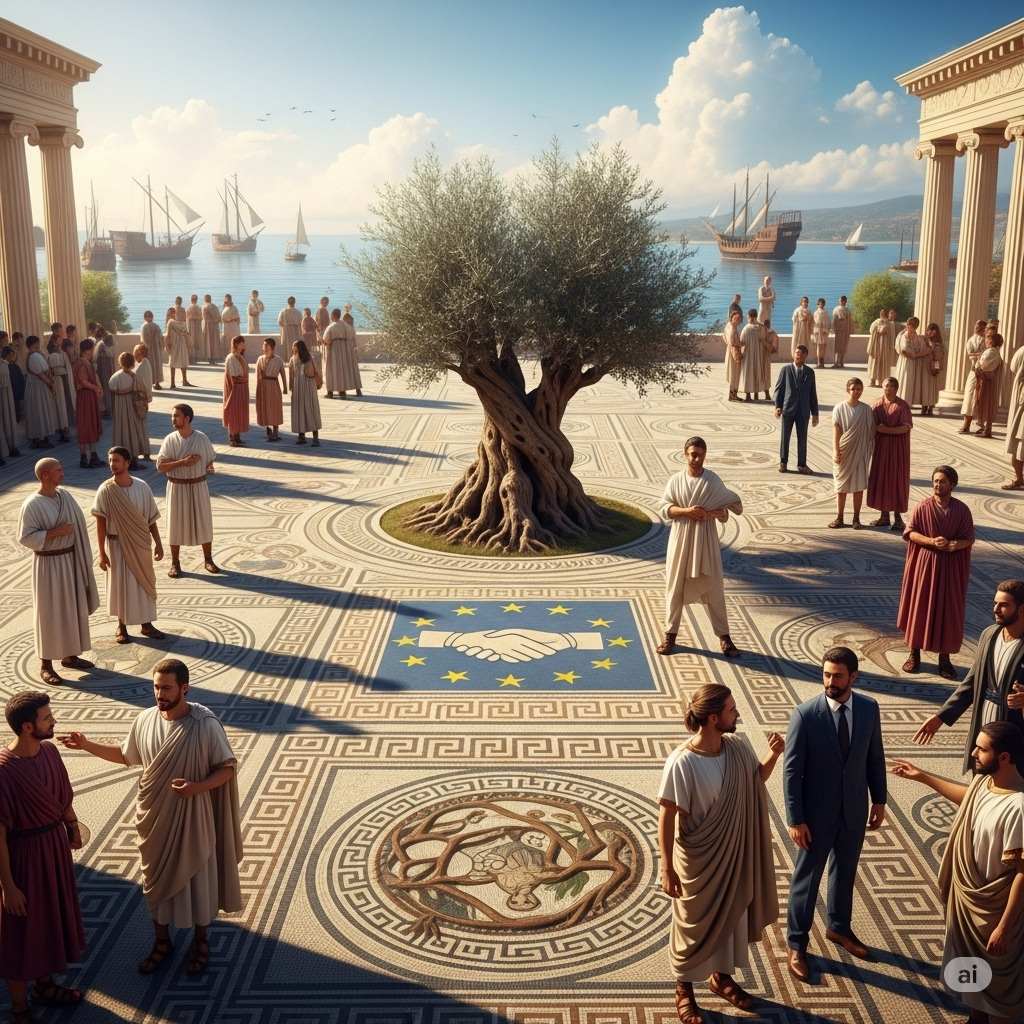
The Mediterranean Sea has always been more than a body of water—it's been a crucible of civilizations, ideas, and political movements. Today, as populist waves crash across European shores from Rome to Athens to Madrid, we're witnessing not a new phenomenon, but the latest chapter in a 2,000-year-old political narrative that began in the Roman Forum.
The parallels are striking. In the second century BCE, Tiberius Sempronius Gracchus reacted to an empire populated by destitute people and homeless legionaries by employing radical measures of land reform and redistribution. Sound familiar? Gracchus and his followers, the populares, challenged the entrenched power of the optimates—the aristocratic elite—by appealing directly to the masses with promises of economic relief and political representation.
The populares sought to increase the power of the people while advocating primarily for the interests of the urban poor and the plebeians. Their political agenda involved a stern challenge to the authority of the traditional elites of the Senate. Replace "Senate" with "Brussels" or "Washington," and you have the blueprint for contemporary populist movements from Italy's Lega to Spain's Vox to Greece's SYRIZA.
But here's what makes the Mediterranean context particularly fascinating: populism is the brainchild of the elite. That's how it was in Ancient Rome, and the same is true today. The Gracchi brothers weren't peasants—they were patricians who weaponized popular discontent for political gain. Today's populist leaders, from Matteo Salvini to Marine Le Pen, often emerge from privileged backgrounds, masterfully channeling public frustration while serving their own ambitions.
The Mediterranean's geography has always made it a natural laboratory for populist politics. Its interconnected coastal cities, from ancient Alexandria to modern Barcelona, create perfect conditions for the rapid spread of ideas—and grievances. The region's history of imperial domination, economic exploitation, and cultural clash provides fertile ground for the "us versus them" narratives that populists thrive on.
Consider Italy, where populist parties of both the left and the right enjoying high levels of popular support and taking, or have gotten close to taking, governmental power have fundamentally altered the political landscape. The Five Star Movement and Lega didn't emerge in a vacuum—they're the latest manifestation of Italy's long tradition of challenging established authority, dating back to the medieval city-states' rebellion against imperial control.
In Spain, the share of the vote going to populist parties roughly doubled between 2015 and 2019, rising from around 13% to around 25%. This surge reflects not just economic discontent from the 2008 crisis, but deeper historical grievances rooted in centuries of centralized rule and regional suppression.
Greece presents perhaps the most compelling case study. SYRIZA's rise wasn't merely a response to austerity—it tapped into a narrative of foreign domination that resonates from the Ottoman occupation to German-imposed fiscal discipline. The populist appeal to restore national dignity against foreign creditors echoes the ancient Greek concept of autonomia—self-rule against external interference.
What makes today's Mediterranean populism particularly dangerous is how a populist surge in Europe is affecting Euro-Mediterranean cooperation 25 years after the Barcelona Process was launched, reinforcing existing trends of de-Europeanization and renationalization. Unlike their Roman predecessors, who ultimately strengthened imperial institutions, modern Mediterranean populists are actively undermining the multilateral frameworks that have maintained regional stability.
The pattern is troublingly familiar. Rome's populares began with legitimate grievances about inequality and political exclusion. But their methods—bypassing traditional institutions, appealing directly to the mob, demonizing opponents—ultimately destabilized the Republic. Violent rhetoric and disregard for political norms was the beginning of Rome's end, leading not to popular empowerment but to Caesar's dictatorship.
Today's Mediterranean populists face a choice that their Roman ancestors didn't: whether to work within democratic institutions or tear them down. The stakes are higher now. In an interconnected world facing climate change, migration, and economic inequality, the Mediterranean needs more cooperation, not less.
The sea that once connected civilizations risks becoming a barrier between them. The populist wave washing over Mediterranean shores carries both the ancient promise of popular empowerment and the timeless threat of democratic collapse. History suggests that when populism becomes purely destructive—when it abandons reform for revenge—it ultimately serves neither the people nor the state.
The Mediterranean has survived empires, invasions, and revolutions. Whether its democracies can survive this latest populist tide may determine not just the region's future, but Europe's as well. The ancients understood that the sea connects as much as it divides. Today's leaders would do well to remember that lesson before the currents carry them too far from shore.
The writer is a political analyst specializing in European and Mediterranean affairs.
Comments (moderated)