Mardin Was Never in the Plan
I arrived in Mardin by accident, on my way out of Iraq.
As an international development professional, I am used to working in uncertain environments — but I had not expected this particular journey: an evacuation as the regional security situation deteriorated sharply amid the widening U.S.-Iran confrontation. In recent days, security alerts and diplomatic drawdowns had spread across the region, with attacks and threats reaching well beyond Iran itself.
Mardin was therefore not a destination in any usual sense. It was an interruption — a temporary stop imposed by events far larger than any individual itinerary. Yet, as so often happens in this part of the world, an enforced pause became an unexpected lesson in history.
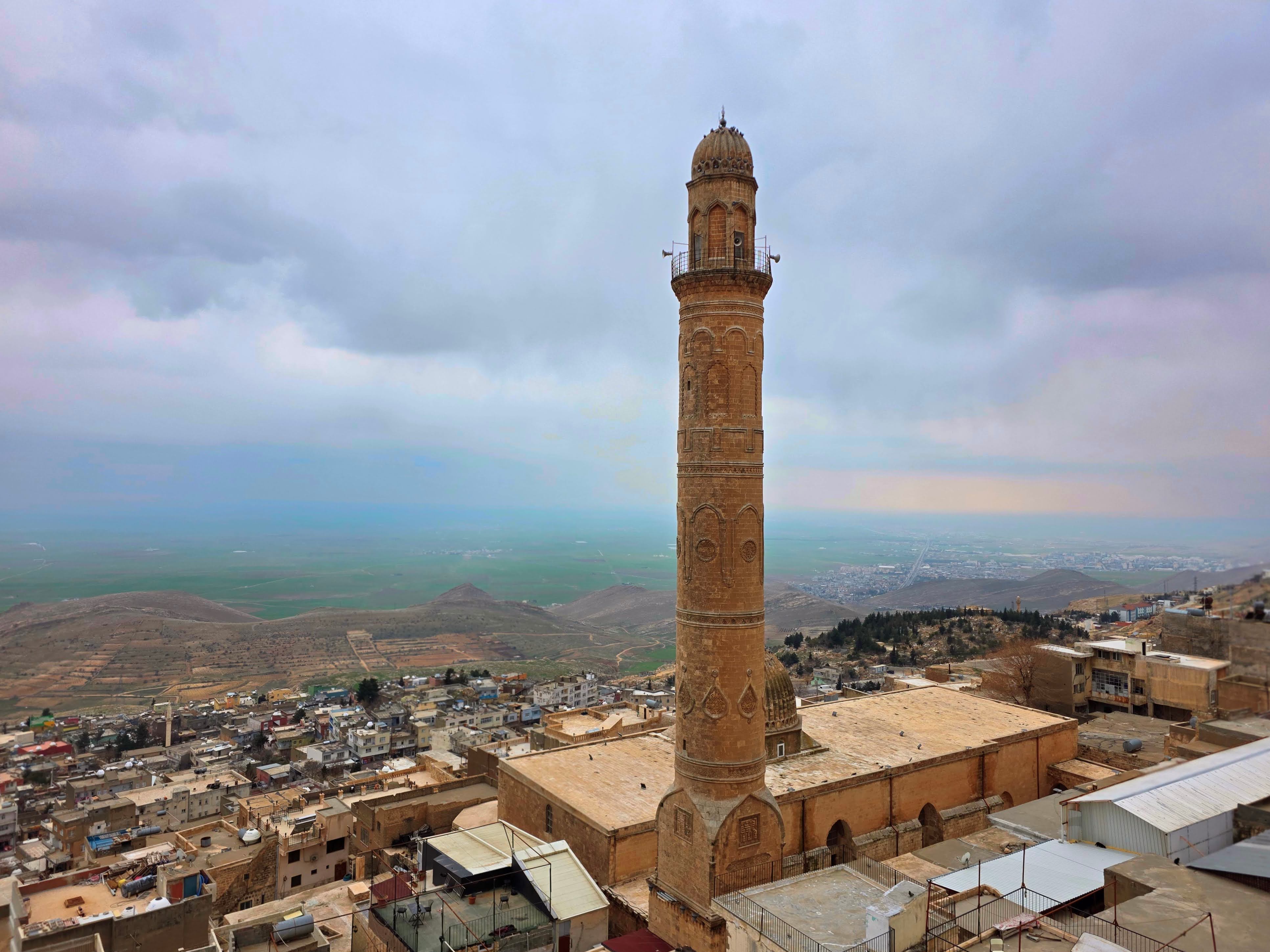
Seen from its steep streets and terraces, Mardin appears almost suspended above the Mesopotamian plain. The old stone houses carved into the hillside give the city a quiet grandeur. It is not difficult to understand why Mardin has long been recognised as a place of exceptional cultural and architectural significance — its historic urban landscape remains on Türkiye's UNESCO Tentative List, and the city is widely regarded as one of the country's most distinctive ancient settlements.
But what stayed with me was not only the beauty of the place. It was the feeling that Mardin carries several civilisations at once. For someone coming from Iraq — a country where history is ever-present but perpetually overshadowed by crisis — Mardin felt strangely familiar. It is a city shaped by empires, religions, trade routes and coexistence, but also by fragility. Its streets remind the visitor that the Middle East is not only a theatre of conflict. It is also a repository of continuity.
That is especially true of the Syriac heritage of Mardin and the wider Tur Abdin region. UNESCO identifies Tur Abdin as a unique cultural landscape defined by ancient monasteries, churches and villages associated with Syriac Christianity — one of the oldest continuous Christian traditions in the world. In Mardin, this is no abstract historical footnote. It remains woven into the city's living identity.
One of the most striking expressions of that continuity is Syriac wine. In and around Mardin, Syriac families have maintained a long tradition of winemaking — not simply as a commercial practice but as part of a religious and cultural inheritance passed down through generations. The tradition is particularly alive around Midyat and its neighbouring settlements, where it persists as both craft and memory.
That, for me, was the real surprise of Mardin. I arrived carrying the mental weight of security updates and the unsettling awareness that the wider region had grown more volatile still — that Iraq itself remained exposed to spillover. Yet even briefly, another Middle East came into view: older, deeper, more layered, and still capable of preserving memory through architecture, faith and craft.
That is why this unplanned stop mattered. Mardin was not where I intended to go. But in the middle of a journey defined by war and uncertainty, it offered something rare: perspective. It reminded me that even in times of upheaval, there are places where history speaks in a quieter register — through stone walls, ancient communities, and a glass of wine made from a tradition that refused to disappear.
Comments
There are no published comments yet.