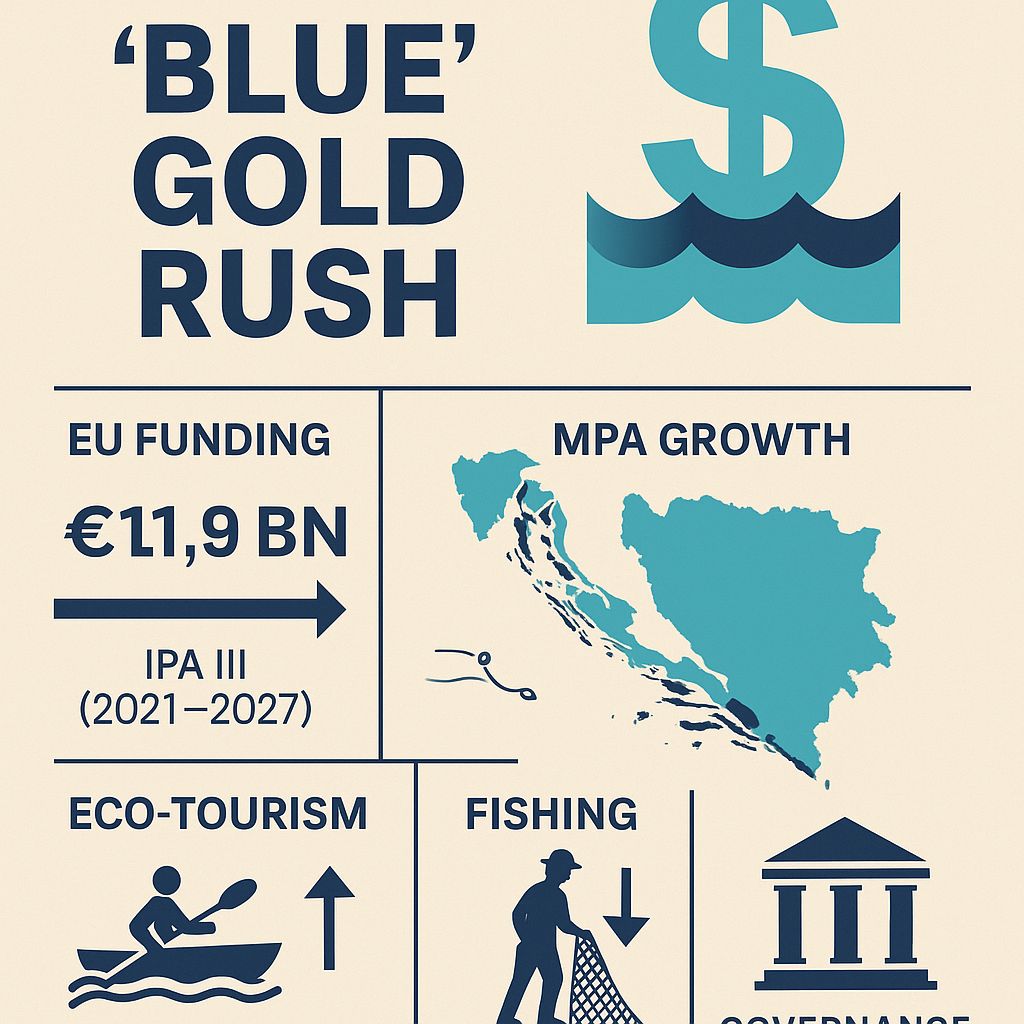
Marine Parks Multiply—But Who Benefits?
From the fjords of Boka Bay to the pristine shores of Dalmatia, Marine Protected Areas (MPAs) are rapidly expanding along the Adriatic coast. Promoted as a core pillar of the region’s “blue economy,” these zones aim to regenerate marine life, safeguard biodiversity, and unlock eco-tourism revenue. But beneath the surface, a more complex question arises: Who actually profits from this blue transformation?
Environmental Victory—or Displacement in Disguise?
MPAs are widely praised for helping fish stocks rebound and attracting nature-conscious travellers. Yet, some observers argue that small-scale fishing communities are being squeezed out by restrictive access rules and rising operational costs.
Follow the Money: EU Funds and Coastal Winners
The European Union has allocated over €11.9 million through cross-border cooperation programmes like IPA III (2021–2027) to support marine conservation and eco-tourism. National governments and municipalities are also injecting funds. However, a significant share is awarded to international consultancies, national park administrations, and tourism ventures—leaving many local fishers and cooperatives underfunded or bypassed entirely.
Regional development projects such as SMART ADRIA and B-VISA 2030 aim to scale up eco-tourism and aquaculture, but critics say these initiatives often favour better-connected applicants. In several coastal municipalities, licenses for kayak tours, diving permits, and waterfront concessions have clustered around politically-linked tourism businesses.
The Eco-Tourism Paradox
While eco-tourism brings new income, it also introduces competition for space, permits, and visibility. Some communities complain that zoning plans are redrawn without public consultation. “It’s conservation from the top down,” says a local NGO in Bar. “If we don't speak English or have a marketing consultant, we’re left out of the blue economy.”
Governance Gaps and the Risk of Inequality
Observers warn that the rapid rollout of MPAs—without accompanying governance reforms—risks deepening local inequalities. In Albania, the declaration of new coastal conservation zones triggered confusion among local fishers over access rights, while in Croatia, critics question how concessions are allocated within popular marine parks.
What Comes Next?
The Adriatic’s shift toward marine protection offers real environmental gains. Yet to avoid repeating the extractive patterns of the past, policymakers must ensure transparency, local consultation, and inclusive benefit-sharing. If managed wisely, the blue economy can lift up coastal communities—not push them to the margins.